-1.png?width=180&height=120&name=Untitled%20design%20(5)-1.png "Origin Aqua White-Logo")


If you are researching pool systems, you have probably heard that a salt water pool is the healthy, chemical-free alternative to chlorine. Almost everyone in the industry says so. The truth is simpler: salt water pools contain chlorine. They just make it on-site rather than buying it in a bottle.
How a Salt Water Pool Actually Works

A salt water pool uses a device called a salt chlorinator (or salt cell). You dissolve ordinary salt into the pool water. The chlorinator passes the water across metal plates carrying a low electrical current. Electrolysis splits the sodium chloride molecules and produces chlorine gas, which immediately dissolves into the water as sodium hypochlorite.
This is the same active compound in liquid chlorine. Your pool water ends up with roughly 1 to 3 parts per million of free chlorine, the same target range as a conventionally dosed pool. The chemistry is identical. Only the source differs.
The appeal is mostly practical: you buy salt in large bags instead of liquid chlorine, and the generator runs automatically for more consistent levels. But the water itself is chlorinated water.
Salt Water Pool vs Chlorine: What's Actually Different?

The comparison between salt water and chlorine rests on a false premise. Both are chlorine pools. The question is only whether you want to buy your chlorine ready-made or produce it yourself.
The practical differences are small. Salt water has a slightly silkier feel due to the dissolved salts, similar to mild sea water. The chlorine odour can be marginally lower at well-managed salt pool concentrations. You handle fewer bottles of liquid chlorine.
That is where the difference ends. Chloramines form when chlorine reacts with organic matter from swimmers (sweat, skin cells, sunscreen). A salt water pool produces them in exactly the same way. For a full side-by-side breakdown, see our salt water pool comparison guide. The "pool smell" people associate with chlorine is chloramine, not free chlorine itself. Skin irritation, red eyes, hair bleaching, swimwear degradation, and indoor air quality problems from chloramine vapour: all of these remain in both types.
Are Saltwater Pools Healthier?

Most people switching to a salt water pool are doing it for their health. The benefits are real, but modest, and the marketing oversells them considerably.
The usual claim points to the softness of salt water. Dissolved sodium chloride does make the water feel slightly different on skin. Some people with mild chlorine sensitivity report fewer reactions, particularly in a well-maintained pool running at the lower end of the chlorine range. That is a real, if modest, benefit.
What changes nothing is the chloramine problem. People with eczema, psoriasis, asthma, or genuine chlorine sensitivity are reacting to chloramines and disinfection byproducts, not just free chlorine. A salt water pool produces the same byproducts. The switch sometimes brings improvement because well-run salt water pools tend to be better maintained overall, not because the chemistry is fundamentally different.
For indoor pools, the health argument weakens further. Chloramine vapour accumulates in enclosed spaces. It is the primary cause of coughing, throat irritation, and chemical smell in indoor pool buildings. Moving from conventional chlorine to a salt chlorinator does nothing to address this, because both systems generate the same chloramine byproduct.
What Are the Downsides of a Salt Water Pool?

Salt water pools have real drawbacks that often get buried in promotional coverage.
Salt corrosion. Dissolved salt attacks metal fittings, ladder rails, pump housings, and concrete over time. Specialist salt-resistant materials cost more upfront, and maintenance on corroded parts is an ongoing expense.
Equipment cost. Salt chlorinators require replacement cells every 3 to 5 years, typically several hundred pounds each. Heating systems and pool equipment must be rated for salt exposure.
pH drift. The electrolysis process drives pH upward, so you still need pH adjusters and regular water testing. You are not done with pool chemicals entirely, just some of them.
Salt levels need monitoring. Too little and the chlorinator does not produce enough chlorine. Too much accelerates corrosion and throws off water balance.
None of these are reasons to avoid a salt water pool if it fits your circumstances. They are reasons to treat the "low maintenance, no chemicals" pitch with some scepticism.
Is There a Genuinely Chlorine-Free Pool Option?

Yes, and it is a different category entirely from salt water, UV, or ozone systems.
The Origin Aqua Mineral+Biome® system uses no chlorine at any stage: not generated, not added, not present as a residual. Instead of killing pathogens with a disinfectant, it removes the nutrients they need to survive. The mechanism, developed by Origin Aqua's PhD microbiologists following a breakthrough in 2013, eliminates phosphate, nitrogen, and carbon from the water. Without those nutrients, bacteria and algae cannot grow.
The result is natural spring-quality mineral water: crystal-clear, soft on skin, completely odourless. Because there is no chlorine to react with organic matter, no chloramines form. The water contains no disinfection byproducts, has no pool smell, and avoids the salt corrosion that comes with electrolytic systems.
For indoor pools, the difference is immediate. The chemical smell disappears. The air quality in the pool room changes. People with asthma, eczema, or skin sensitivities notice the difference from the first swim.
Read more about the science on our pool filtration technology page.
Converting Your Pool to Chemical-Free

If you have a salt water or chlorine pool and want to move to a genuinely chemical-free system, the conversion is simpler than most people expect.
The Mineral+Biome® system retrofits to an existing pool in one day. Your existing pump and pipework stay in place. No structural work, no replumbing, no rebuild. The pool is drained, the system is installed, and refilled with water that requires no added chemicals from that point.
For pool owners currently spending on chlorine, stabiliser, pH adjusters, algaecide, and shock treatments, the ongoing chemical cost drops to zero. The water quality improves measurably from the first fill. For more on what this looks like in practice, see our guide to chemical-free pools or check the pool FAQ.
Häufig gestellte Fragen

Do salt water pools still contain chlorine?
Yes. A salt water pool uses electrolysis to convert dissolved sodium chloride into chlorine. The pool water contains the same concentration of free chlorine (1 to 3 ppm) as a conventionally dosed pool. Salt water and chlorine-free are not the same thing.
Are saltwater pools healthier than chlorinated pools?
Marginally, in some cases. Salt water has a slightly softer feel and some people with mild chlorine sensitivity notice fewer reactions. However, chloramines form in salt water pools exactly as they do in chlorine pools. Chloramines drive the key health problems people associate with chlorine: eye irritation, skin reactions, and indoor air quality issues. All of these persist in salt water pools.
Is a salt water pool good for your skin?
Some people find salt water gentler on skin. The slightly silkier texture is a real difference. For people with serious skin conditions like eczema or psoriasis, improvement is often limited because chloramine exposure remains the same, and chloramines are the main trigger for skin reactions after swimming.
What is the downside of a salt water pool?
Salt corrosion on metal and concrete, higher equipment costs (replacement salt cells every 3 to 5 years), ongoing pH management, and regular salt level monitoring. Salt water pools still require pH adjusters and other chemicals despite the low-maintenance reputation.
Can you have a saltwater pool without chlorine?
No. A salt water pool by definition uses electrolysis to produce chlorine from salt. A genuinely chlorine-free pool requires a different system: living microbial filtration, which removes the nutrients pathogens need to survive rather than using any form of disinfectant.
Should you shower after a salt water pool?
It is good practice. Rinsing removes chlorine residue, chloramines on the skin surface, and dissolved salt. For people with sensitive skin, showering immediately after reduces post-swim irritation considerably.
How Origin Aqua's Mineral+Biome® Compares

A salt water pool is a chlorine pool with a different delivery method. Mineral+Biome® is a different system. No chlorine at any stage, no chloramines, no pool smell, and no salt corrosion. The water is natural spring-quality mineral water: crystal-clear, soft on skin, and completely odourless from day one.
The system works for heated pools, indoor pools, swim spas, and outdoor pools. It retrofits to an existing pool in one day with no replumbing required. It has been in commercial use for over a decade, and was chosen by Kate Winslet for her own pool.

Kate Winslet entscheidet sich für Mineral+Biome
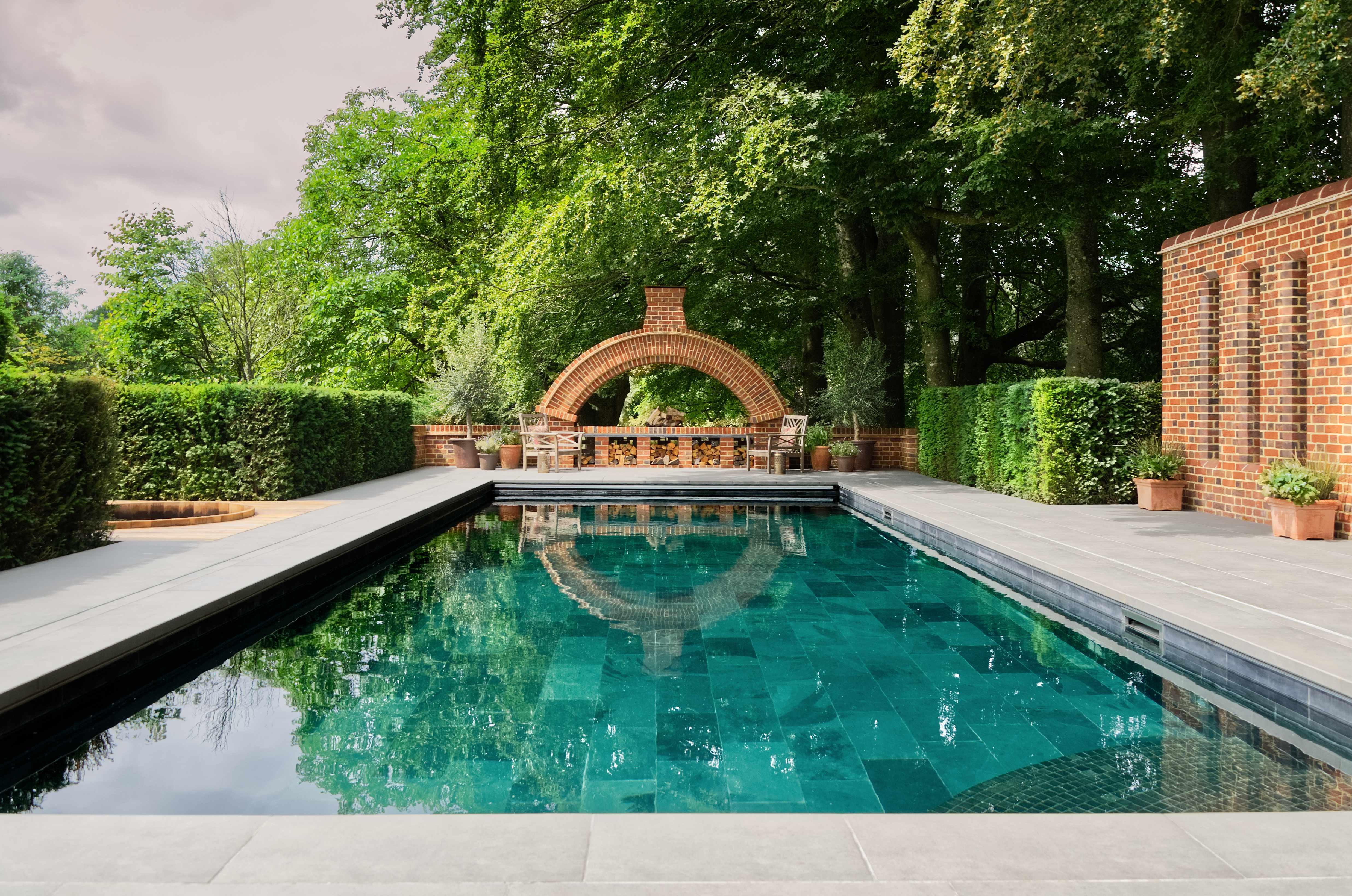
Warum Mineralwasserpools zum Standard in den Häusern von Supervermögenden und Prominenten werden
%20(2).png?width=1366&height=768&name=Email%20Insights%20(Website)%20(2).png)
Noch keine Kommentare
Teilen Sie uns Ihre Meinung mit