-1.png?width=180&height=120&name=Untitled%20design%20(5)-1.png "Origin Aqua White logo")

Most pool owners asking this question have already spent years on chemicals and want to know whether there is a way out. The short answer: yes. Most existing pools can be retrofitted to run without any added chemicals. The process takes one day and requires no rebuild or replumbing.
This is not a minor upgrade. It changes how the water works, how it feels, and how much time and money the pool costs to run. What it does not change is the pool itself.
What Chemical-Free Actually Means for an Existing Pool
Before deciding anything, it is worth being precise about what chemical-free means. Many systems are marketed as alternatives to chlorine but still use chemicals at some point.
Salt water pools generate chlorine on-site through electrolysis. The pool still contains chlorine at 1 to 3 parts per million, the same level as a conventionally dosed pool. UV systems reduce the amount of chlorine needed but do not eliminate it. Ozone systems work similarly: they reduce chemical use but require backup dosing. Read more about this in our article on whether salt water pools are really chlorine-free.
A genuinely chemical-free pool uses biological filtration: a living microbial system that removes the nutrients pathogens need to survive. No disinfectant is added at any stage. The water is clean because it has been starved of the phosphate, nitrogen, and carbon that algae and bacteria require to grow.
This is not the same as a swimming pond. Swimming ponds use aquatic plants to filter the water, cannot be heated to swimming pool temperatures, and require a separate planting zone. A biological filtration retrofit keeps your pool looking, functioning, and feeling like a pool. It can be heated, covered, and used throughout the year, and water treatment doesn't limit which heating method you choose.
Which Existing Pools Can Be Retrofitted
The short answer is most of them. The system works with the existing filtration circuit rather than replacing it, so compatibility is broad.
Pool types that retrofit successfully include concrete pools, fibreglass shells, vinyl liner pools, indoor pools, outdoor pools, heated pools, and swim spas. The one practical requirement is sufficient space in the existing plant room to house the new system. If the plant room can accommodate it, the retrofit is possible.
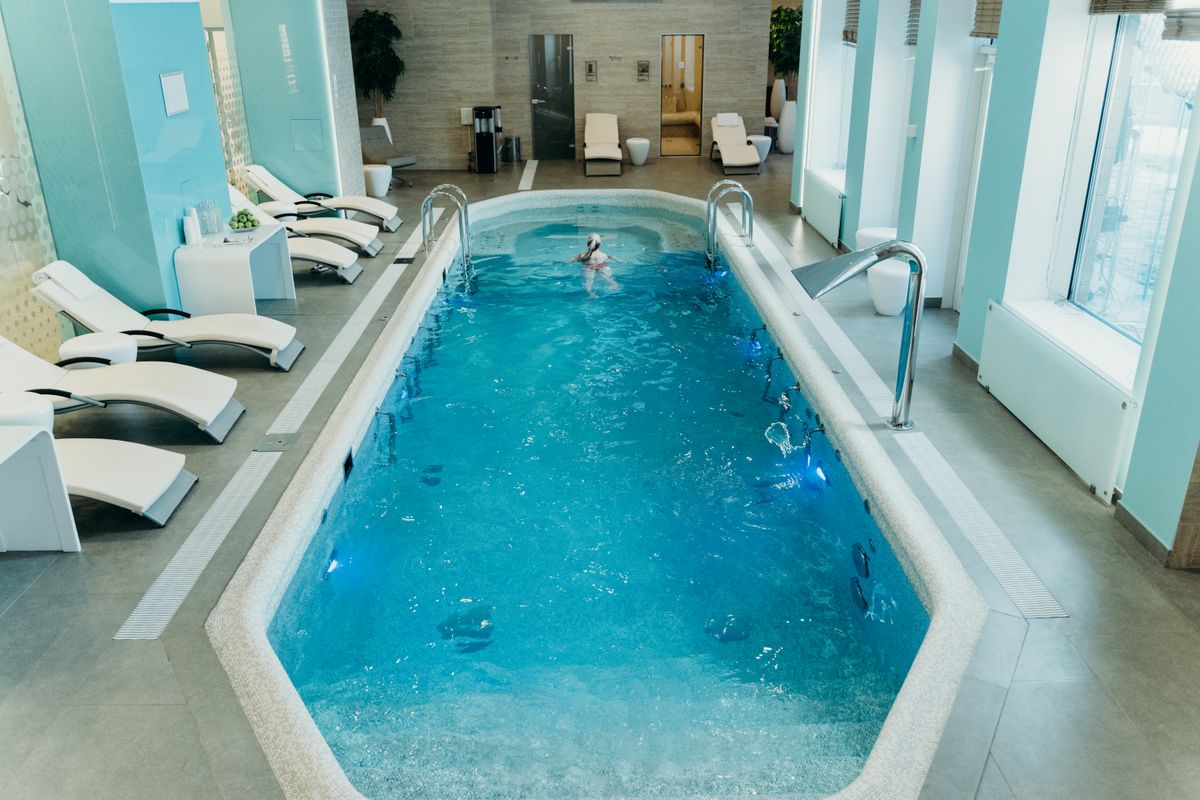
Indoor pools are a particularly strong candidate. Chlorine in an enclosed pool building produces trichloramines: the gas responsible for the sharp smell and respiratory irritation in traditional indoor pools. Removing chlorine from the system eliminates trichloramine production entirely. The air quality in the pool room changes immediately after installation.
What the Retrofit Process Involves
The installation takes one day. First, the existing water is treated: for chlorine pools, the residual chlorine is neutralised using a targeted chemical process before the system goes in. For salt water pools, the water is drained entirely before installation begins.
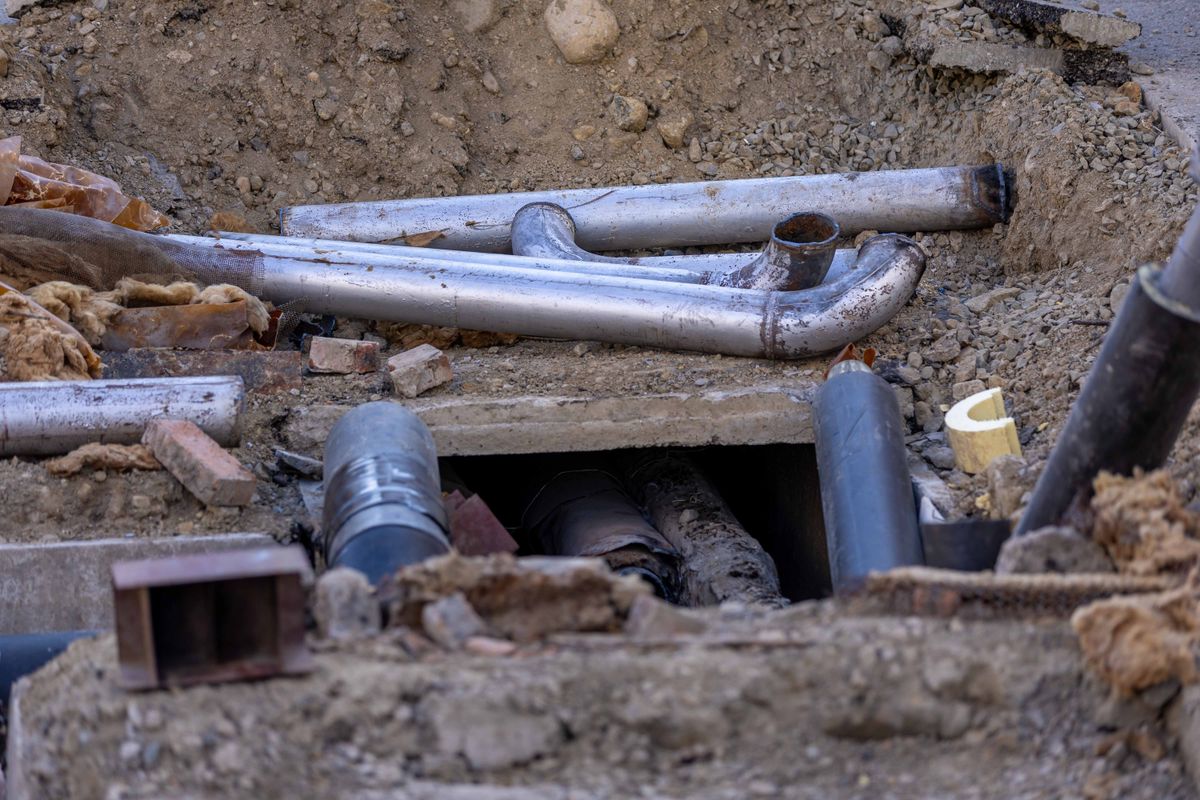
The old plant room equipment is then stripped out, leaving only the flow and return manifolds that connect to the pool shell. The Mineral+Biome® system is connected directly to these manifolds, along with a new energy-efficient pump. Replacing a typical older single-speed pump can save hundreds of pounds per year in electricity costs. New modern controls with a touch screen are added at the same time. Any pool installed today should include automation, reporting, and a customer app as standard: automated backwash cycles, dosing control, monitoring of key performance indicators including flow rate, and full visibility for the pool owner from their phone.
No new pipework is laid through walls or floors. No structural changes are made to the pool or the building. After installation, the microbial ecosystem takes a short period to establish fully. The pool is safe to swim in throughout. Over the following weeks, the system reaches its steady state: a self-sustaining biological community that maintains water quality without any chemical inputs.
What Changes After the Retrofit
The most immediate change is the water itself. There is no chlorine smell. Eyes do not sting after swimming. Skin feels softer rather than dried out. Swimwear does not fade. For families with children, or anyone with sensitive skin, this difference is noticeable from the first swim.
The maintenance pattern changes significantly. A conventional chlorine pool typically requires 6 to 12 maintenance visits per year, plus ongoing chemical purchases. After a chemical-free retrofit, the service requirement drops to two technical visits per year. Chemical spend drops to zero.
Electricity use also falls. The biological system requires a lower turnover of water through the filters than conventional filtration, which means the pump runs at lower speeds and consumes less power. The overall direction is consistent: lower running costs across the board, including fewer maintenance visits and zero spend on disinfection chemicals or pH adjustment.
What Stays the Same
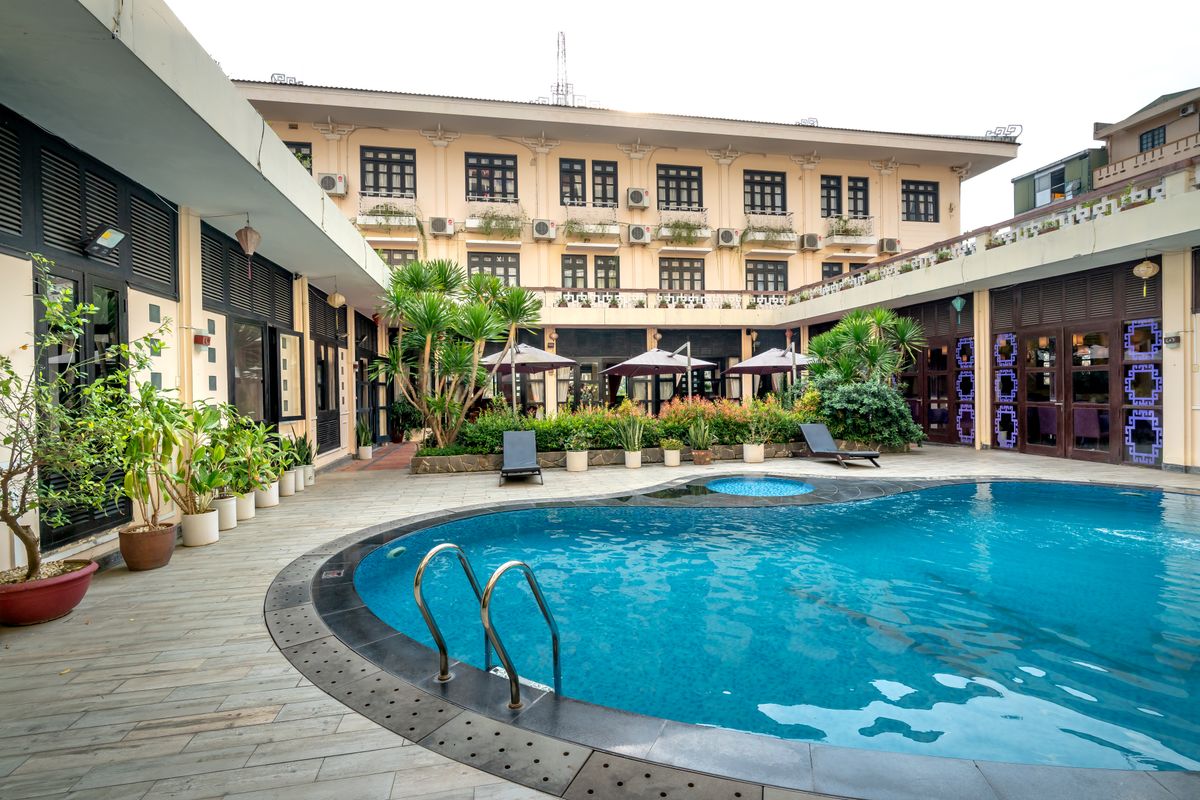
The pool structure does not change. The pipework stays. The heating system stays. For pool owners who have invested in a high-quality pool, there is no reason to alter any of it.
If you have a salt water pool, the salt chlorine generator is removed because it is no longer needed. Everything else in the system remains, and the pool runs without the ongoing cost of salt dosing and cell replacement every three to five years.
The maintenance savings are significant. Two technical visits per year replace the full conventional service schedule, with no pH adjustment required between visits. For indoor pool owners in particular, where a typical chemical service programme can run to thousands of pounds per year, this reduction in visit frequency and the elimination of pH and disinfection chemical costs represents a substantial annual saving.
Five Questions to Ask Before Retrofitting Any Pool
If you are evaluating retrofit options, these questions will help you distinguish between systems that genuinely eliminate chemicals and those that only reduce them.
Does it produce or use chlorine at any point? Salt systems do. Electrolytic systems do. Any system that uses electrolysis to sanitise the water is producing chlorine, regardless of how it is described. A biological system does not. It relies on the principles of nutrient removal and predation to control algae and pathogens. No chlorine is produced or added at any stage.
What is the ongoing chemical requirement? Some UV and ozone systems still require a residual chemical backup. A genuinely chemical-free system should require no added chemicals after installation.
Is there independent scientific validation? Claims about biological filtration are easy to make. Look for peer-reviewed evidence, not marketing copy. The mechanism should be clearly explained: what is being removed from the water, and how. Origin Aqua's research has been peer-reviewed and published in Nature Water, one of the world's most respected scientific journals, confirming 99.9% pathogen elimination through biological nutrient removal alone.
What does the service model look like? Two visits per year is achievable with a self-sustaining biological system. If a supplier is quoting a service schedule comparable to a chlorine pool, the system may not be as self-maintaining as claimed.
What is the track record in the UK? UK pool conditions are specific: climate, water hardness, bather load patterns. A system with a long UK installation record gives you real performance data rather than projections. Our technology page covers the filtration science and the UK installation history in detail.
Frequently Asked Questions
Can any chlorine pool be converted to chemical-free?
Most can, yes. The retrofit works with the existing filtration circuit, so the key requirements are a working pump and an accessible filter housing. Concrete, fibreglass, vinyl liner, indoor and outdoor pools are all suitable. A site survey confirms compatibility for any specific installation.
How long does a pool retrofit take?
One day. The pool is drained, the existing filter media is removed, the new biological system is installed, and the pool is refilled. No structural work is involved. The pool is ready to use the same day.
Do I need to replumb my pool for a chemical-free retrofit?
No. The biological system integrates into the existing filtration circuit. Your pump, pipework, and pool structure remain in place. No new pipework is required.
What happens to my existing pump and equipment?
The old plant room equipment is stripped out and replaced. The flow and return manifolds that connect to the pool shell stay in place, and the new Mineral+Biome® system connects to these. A new energy-efficient pump is installed at the same time, which typically saves hundreds of pounds per year in electricity compared to a typical older single-speed pump. New touch-screen controls are also added, enabling near-complete automation of backwash, dosing, and performance monitoring.
Can I turn my pool into a natural pool?
The terminology matters here. Natural swimming pools, sometimes called swimming ponds, use planting zones and aquatic plants and function more like a pond than a conventional pool. A chemical-free retrofit is different: the pool keeps its conventional appearance and function but runs without any added disinfectants. See our guide to chemical-free pools for a fuller explanation of the available options.
How do you run a pool without any chemicals at all?
With biological filtration. A living microbial system established in the filter substrate removes phosphate, nitrogen, and carbon from the water. These are the nutrients algae and pathogens need to grow. Remove the nutrients and the water stays clean without any disinfectant. The system maintains itself between service visits. See the pool FAQ for more detail on how this works in practice.
Can these pools be heated?
Yes. Mineral+Biome® works fully with heated pools up to 30 degrees C, with a maximum operating temperature of 32 degrees C. This covers the full range of UK residential and indoor pool temperatures.
Do these pools need plants?
No. This is a common misconception. Mineral+Biome® is a biological filtration system housed in the plant room, not a swimming pond. There are no planting zones, no aquatic plants, and no changes to the pool's appearance or structure.
Are chemical-free pools suitable for indoor pools?
Yes, and indoor pools are where the benefit is most significant. Chlorinated indoor pools produce trichloramines: the gas responsible for the sharp smell, eye irritation, and respiratory problems in enclosed pool buildings. Mineral+Biome® eliminates trichloramines entirely. Indoor pool owners typically see payback within five years through reduced maintenance visits, zero chemical costs, and lower electricity use.
How Origin Aqua's Mineral+Biome® Approaches Pool Retrofits
Origin Aqua's Mineral+Biome® system was developed by PhD microbiologists who proved in 2013 that it is the bacteria in the filtration substrate that drive nutrient removal. Not the plants, not the architecture: the bacteria. That discovery is the foundation of every installation since.
The system holds patents in four jurisdictions: the UK, the EU, the USA, and Canada. No other chemical-free pool system has equivalent intellectual property protection. The peer-reviewed science has been published in Nature Water, one of the world's leading scientific journals.
For pool owners who have spent years managing chemistry and want a different approach, the retrofit route is straightforward. One day, no structural changes, and a pool that requires two technical visits per year rather than a continuous chemical management programme.
To find out whether your specific pool is suitable, request a free specification and we will assess your existing setup and give you a clear recommendation.
A note on terminology: By chemical-free we mean no disinfection chemicals (no chlorine, bromine, salt chlorination, copper or ozone) and no chemical residuals in the swimming water. Trace phosphate management agents are used automatically during filtration — these bind to phosphates and are removed entirely during backwash, leaving no residual in the water. Mineral supplements are used at parts-per-billion concentrations in a food-grade carrier. Read our full definition.
What Is a Chlorine-Free Pool — and How to Get One?

Are Salt Water Pools Really Chlorine Free?
No Comments Yet
Let us know what you think