


A natural swimming pool is a pool cleaned by plants or biological filtration instead of chlorine. Some are planted swimming ponds with reeds around the edge. Others hide the filtration in a plant room and look like a tiled pool.
"Natural pool" gets used loosely across the UK, and the types differ a lot in cost, heating and upkeep. Here is the full breakdown: what each type is, what a natural swimming pool costs in the UK, and an option most guides don't mention.
Origin Aqua has been treating pool water without chlorine since 2010, in 200+ UK pools. We don't build ponds or pools, so this advice isn't selling you one. Ask us about your project →
What Is a Natural Swimming Pool? The Three Types
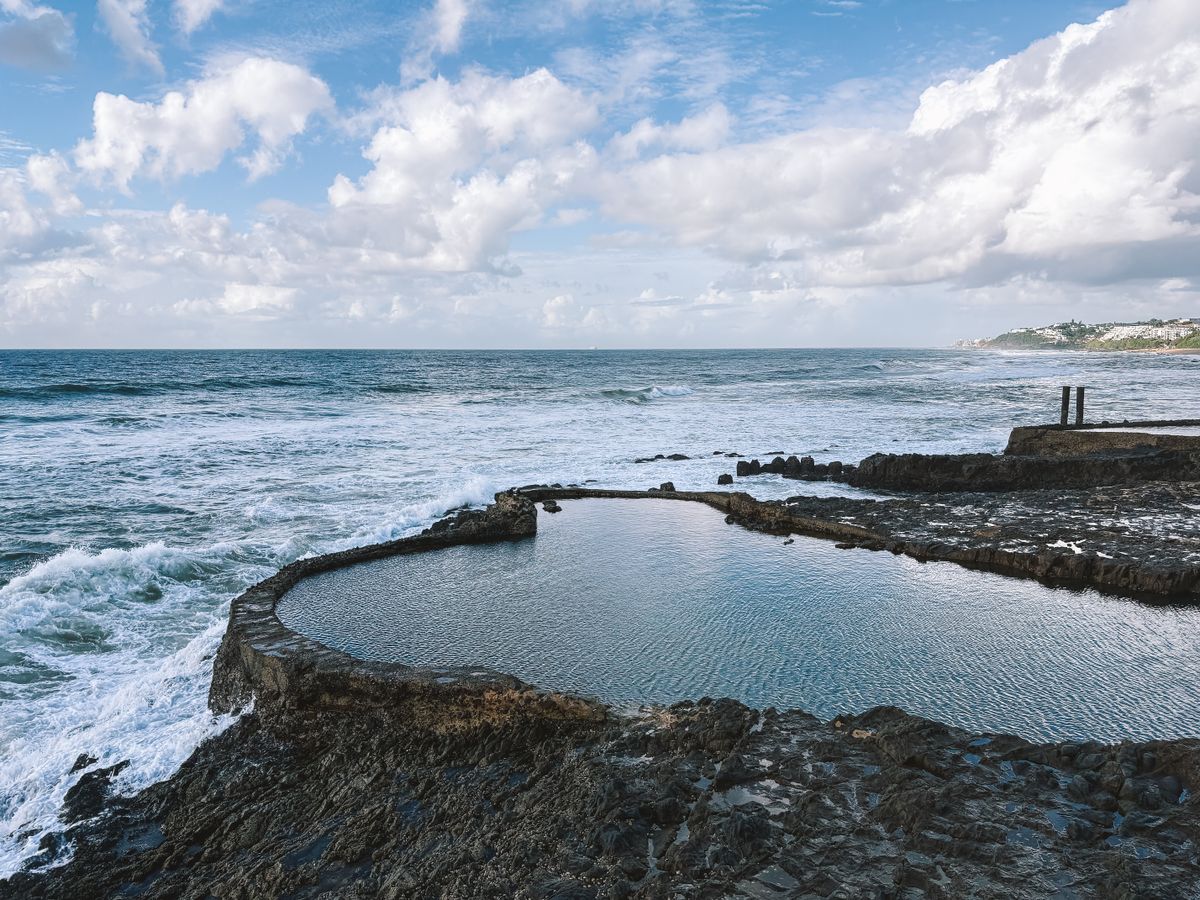
Three different things get sold under the name:
- Swimming pond: plants in a regeneration zone clean the water. Soft edges, gravel floor, wildlife.
- Natural pool: biological filtration hidden in a plant room or buried filter. It can be rectangular and tiled, and look like any pool.
- Biological filtration in a conventional pool: a living filter in the plant room of an ordinary pool, new or existing. This is where Origin Aqua's mineral+biome® sits.
What the first two share is the absence of chlorine or salt chlorination as the main treatment. When UK designers say "natural pool" they can mean either, so check which one a quote is actually for.
Is It Safe to Swim in a Natural Pool?
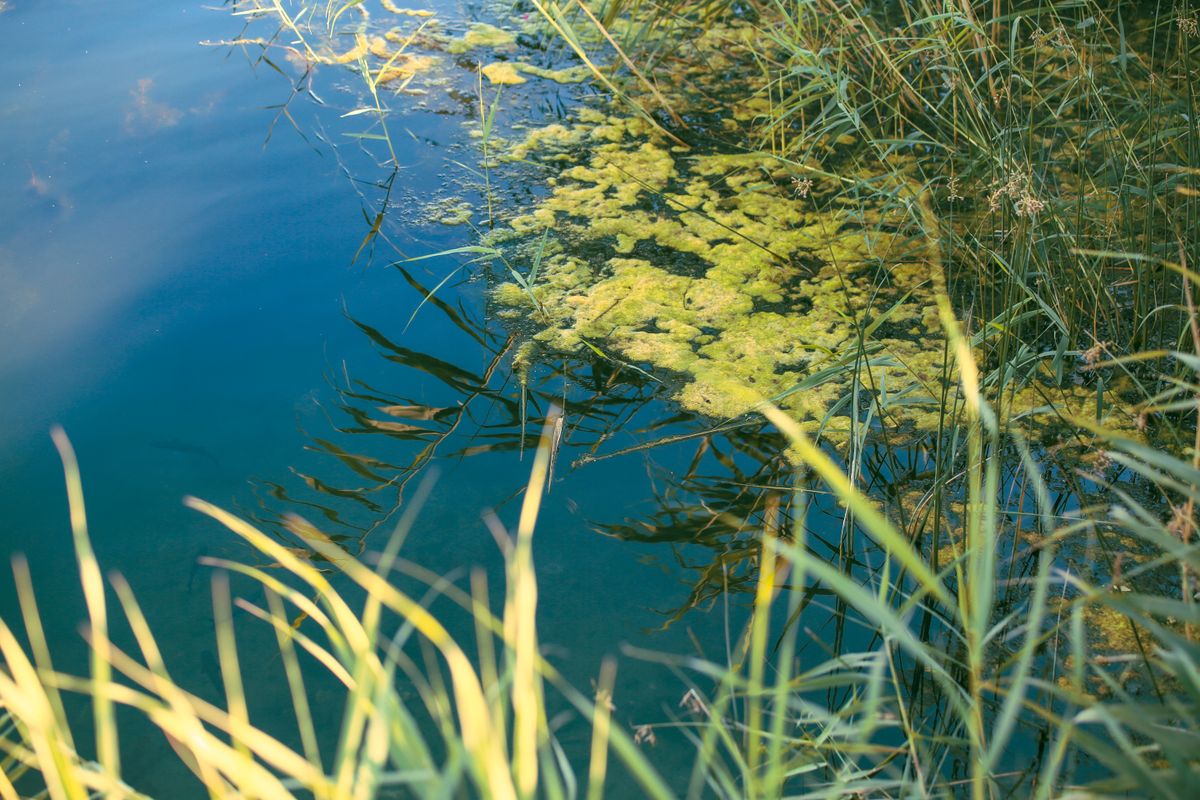
Yes, when the system is properly designed and sized for the number of swimmers. A natural pool doesn't disinfect water the way a chlorinated pool does. Plants and bacteria in the filtration zone remove the nutrients (phosphate, nitrogen and carbon) that algae and pathogens need to multiply.
When the system is undersized, under-maintained or hit by a long hot spell, that balance can slip. Algae turns the water green and clarity can drop for days.
Private natural pools in the UK have no regulatory standard like the codes for public pools, so water quality rests on the design and the upkeep. The British Association of Natural Swimming Pools publishes guidance worth reading before you commission one.
How Do Natural Swimming Pools Stay Clean?
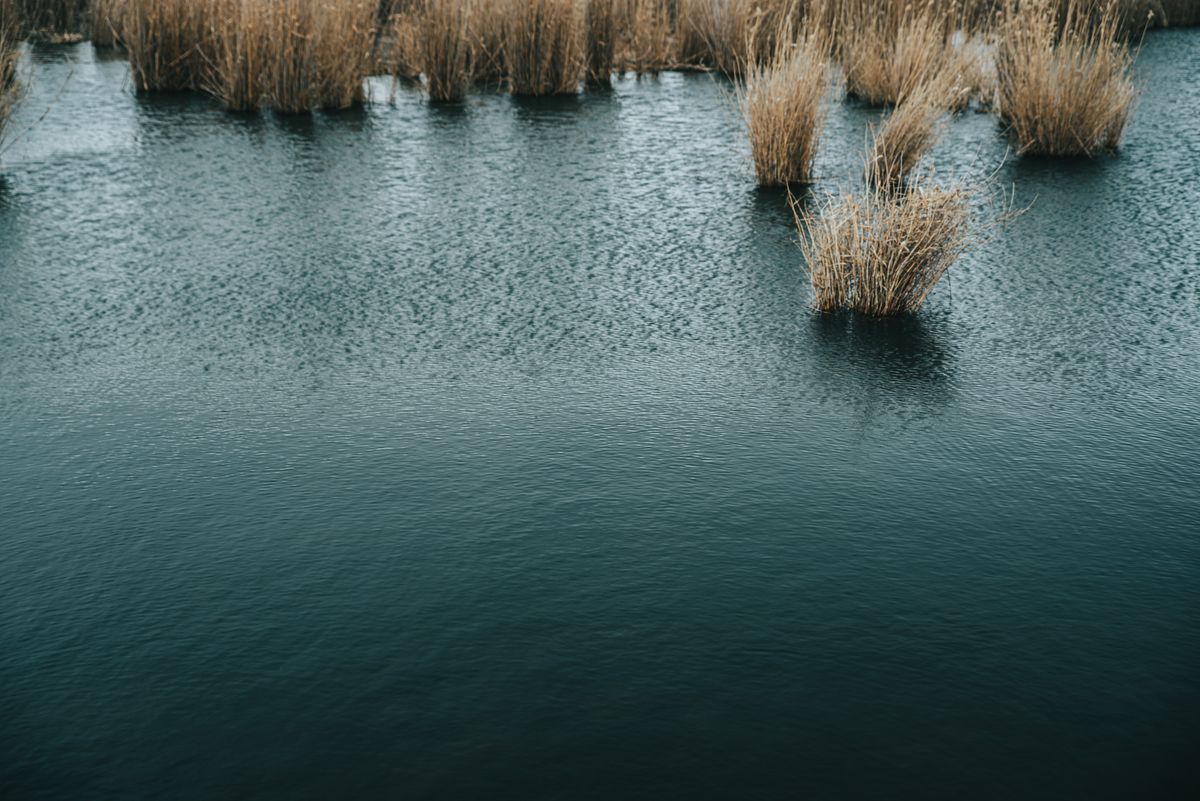
Algae and waterborne bacteria need three nutrients: phosphate, nitrogen and carbon. Remove them and neither can get a foothold, with or without a disinfectant.
In a swimming pond, a pump circulates water through the regeneration zone. Plant roots and the bacteria living on the gravel take up those nutrients. It works when plant density, flow rate and zone size match the water volume and the number of swimmers. Badly sized systems turn green.
Our own PhD microbiologists showed in 2013 that the bacteria in the gravel, not the plants, do most of that nutrient removal. That finding is the basis of mineral+biome®.
The known weakness is that plant filtration isn't static. As the planted zone matures, roots and organic debris build up and it processes nutrients less well. Eventually the zone needs major rework, which most sales conversations skip.
Natural pool plants
Planting is the filter in a swimming pond, so it is chosen for the job, not just for looks. Floating "rafting" plants such as waterlilies and water hawthorn shade part of the surface and help keep the water cool in summer (Gardens Illustrated).
Reeds and other dense marginal planting fill the gravel shelves around the swim zone.
Want clear, chlorine-free water without a planted pond?
mineral+biome® uses biological filtration in a conventional pool, with no chlorine or salt. It can be retrofitted to an existing pool in 1–2 days.
What Is a Swimming Pond?
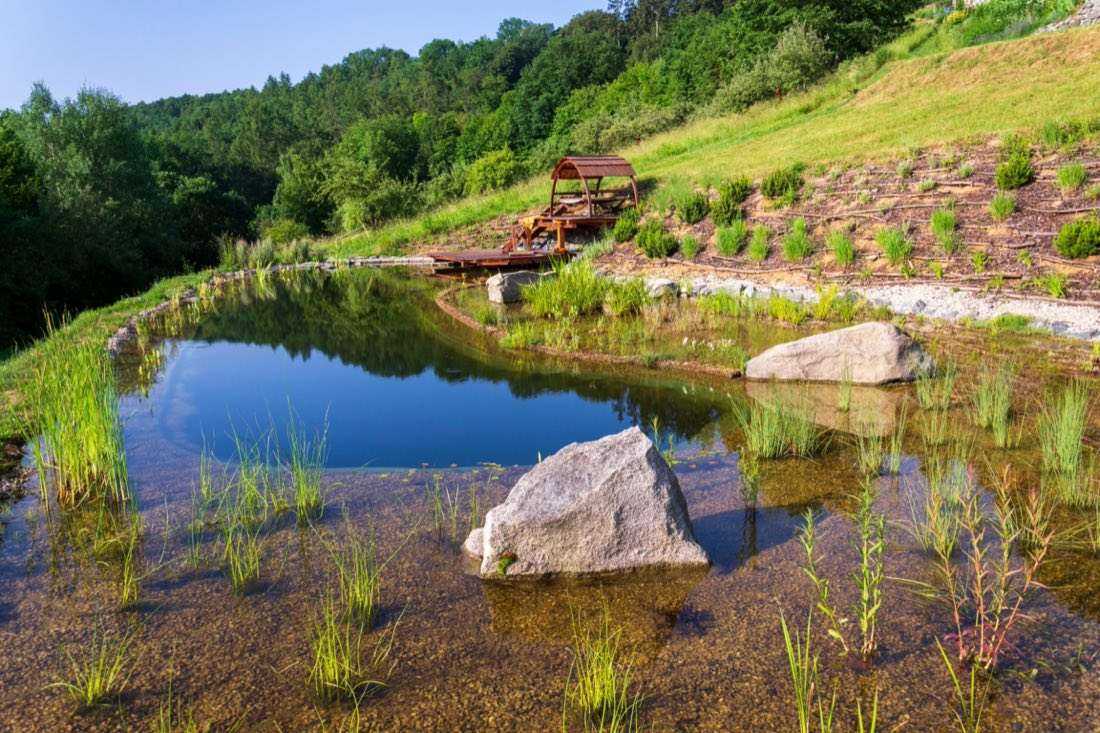
A swimming pond cleans its water through plants, not a filter. Reeds, rushes and submerged plants grow in a regeneration zone, the water circulates through them, and their roots take out the nutrients algae needs. No chemicals; the plants and their bacteria do the work.
The result looks and behaves like a natural pond, because it essentially is one. Dragonflies, frogs and diving beetles move in. The edges are soft and the floor is often gravel or sand rather than tiles.
In a plant-only swimming pond, the planted zone takes 30 to 50% of the surface. On a 10 x 5 m project, up to half the footprint is plants rather than swimming space. The look and the filter are the same thing, unless the filtration is done another way (see the hybrid option below).
Natural Pool vs Swimming Pond: The Key Differences

| Swimming Pond | Natural Pool | mineral+biome® Pool | |
|---|---|---|---|
| Planting zone required? | Yes (30–50% of the surface) | Sometimes | No (or about 20% in a hybrid design) |
| Can be heated? | Only a little | Some designs | Yes, up to 30°C |
| Filtration declines as plants mature? | Yes, over several years | Sometimes | No |
| Wildlife attracted? | Yes | Sometimes | No (unless built as a hybrid) |
| Works with an existing pool? | Only by rebuilding it | Only by rebuilding it | Yes, fitted in 1–2 days |
| Looks like a pool? | No | Partly | Yes |
| Chlorine or salt in the water? | No | No | No |
A hybrid natural pond, which keeps some planting but lets mineral+biome® do most of the filtering, sits between the middle and right-hand columns. More on that below.
How Much Does a Natural Swimming Pool Cost in the UK?
A natural swimming pool is not a cheap alternative to a conventional pool. UK swimming pond builder Turtle Swimming Ponds budgets from about £60,000 for a compact pond of around 50 m², and over £100,000 for larger or more complex designs (Turtle Swimming Ponds).
What moves the price:
- Size and layout: one basin with a modest planted zone costs less than two basins with a large one
- Site: access for diggers, ground conditions and spoil removal
- Liner and build quality: the liner, the walls between swim and planted zones, and decking or jetties
- Filtration: pumps, skimmers and any separate biological filter
- Landscaping: the garden around the pond is often a project of its own
Natural pools that look like tiled pools tend to cost more than planted ponds, closer to a quality conventional pool. For where a pool budget goes, see our guide to swimming pool costs in the UK.
Can you build a natural swimming pool yourself?
Some people do, and self-build can cut the cost. The risks are in the parts you can't see: the liner, the depth and edges for safe swimming, and getting the biological balance right. If you go DIY, pay a specialist to design and size the filtration even if you dig it yourself.
Can a Natural Swimming Pool Be Heated?
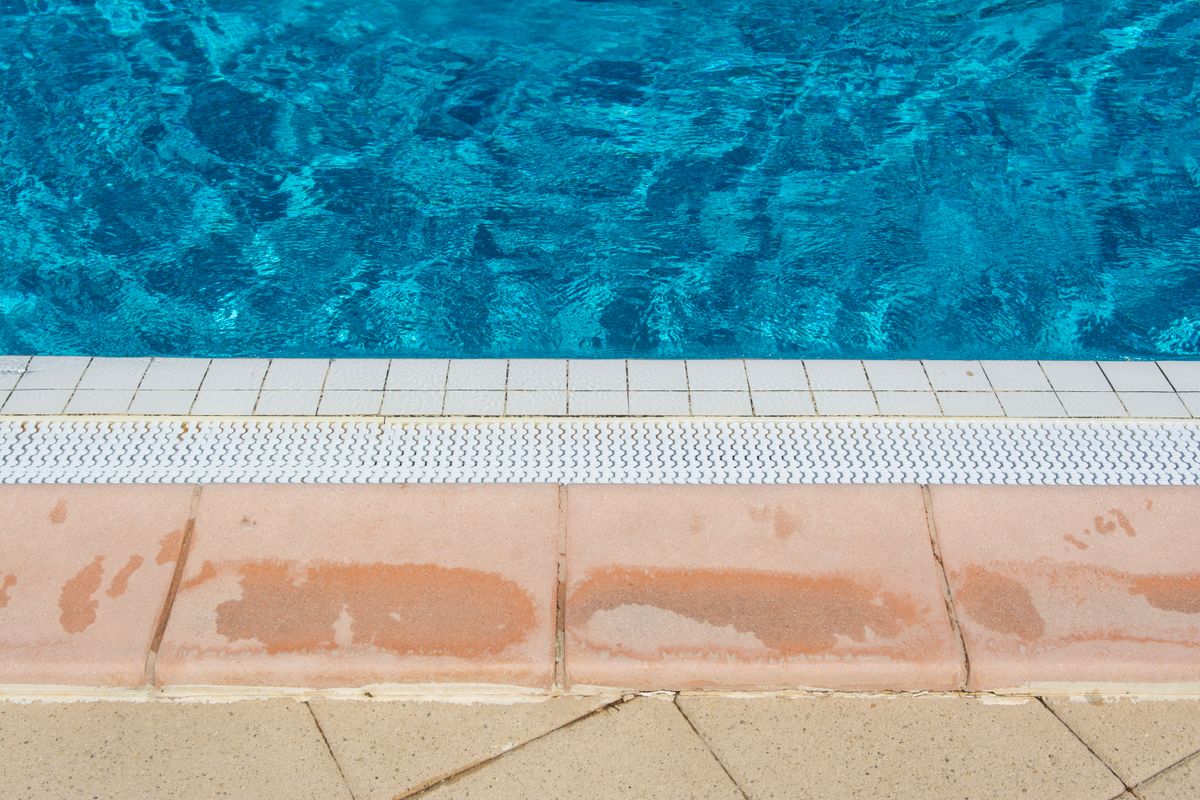
Only a little, if it is a planted swimming pond. The plants and the bacteria that clean the water work within a natural temperature range. Push the water much warmer and algae becomes hard to control.
Gentle heating helps. UK builder Blue Pools says a pond warmed to a level the plants tolerate gives a swimming season of five or six months a year (Blue Pools). The same builder warns that a long hot spell can make pond water too warm for safe swimming late in the spell.
Natural pools that keep the filtration away from the swim zone, using biological media rather than live plants, can usually run warmer. mineral+biome® runs at up to 30°C, so the pool can be heated, covered and used for much more of the year.
If extending the season is your main goal, a planted pond is not the place to start. And if you are weighing up salt, note that a salt water pool still makes chlorine.
Wildlife, Looks and What You Actually Want
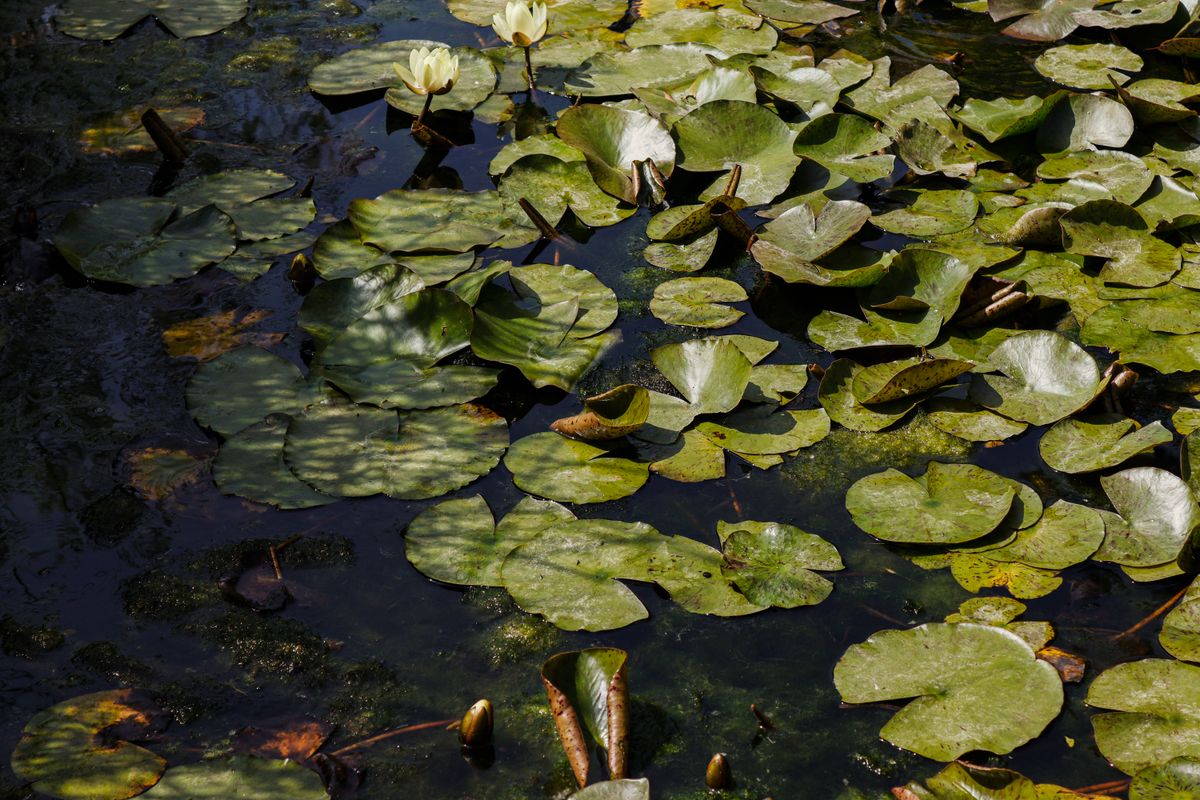
A swimming pond is genuinely beautiful. The planting draws dragonflies, frogs and birds, the edges are soft, and grasses move in the wind. It sits in a garden in a way a tiled pool can't.
If that is what you want, a swimming pond does it well. If you want to cover the pool for winter, heat it for spring and autumn swims, and have it look like a pool, a swimming pond is the wrong product, however good it sounds.
Natural pools without planting zones sit between the two: contemporary shapes, easier to cover, heating still limited by the filtration. UK designers such as Gartenart and Lume Pools work in both styles.
Natural Pool Maintenance: Different Work, Not Less
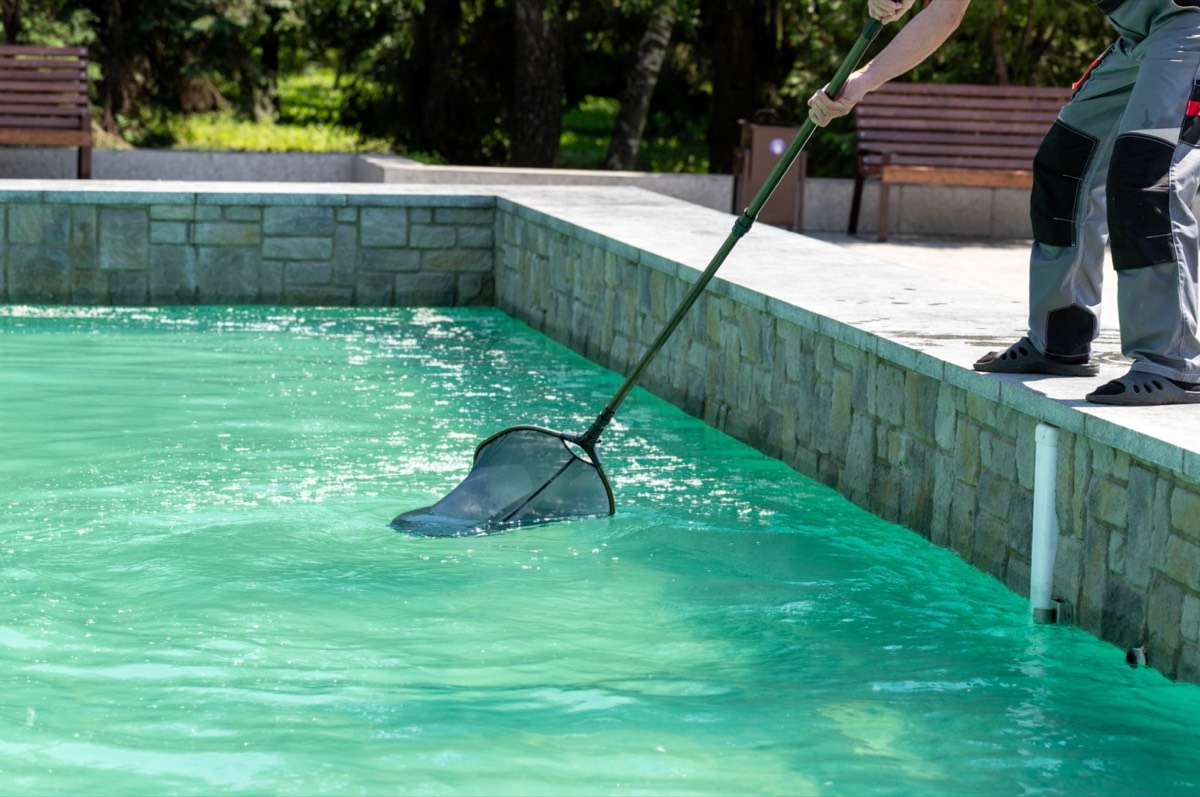
Neither a pond nor a natural pool is low-maintenance. There are no chemicals to dose, but there is seasonal planting work, sediment to clear from the regeneration zone, and nutrient levels to watch. It is as much gardening as pool care.
Turtle Swimming Ponds puts typical upkeep at £300 to £1,000 a year, depending on size and use (Turtle Swimming Ponds). Budget separately for the planted zone's major rework as it matures.
Do You Need Planning Permission for a Natural Pool in the UK?

Usually not. A domestic swimming pond or natural pool often falls under permitted development if it is not in the front garden, takes up no more than half the garden, and is not in a conservation area or National Landscape (formerly AONB).
Local authorities differ, though. A large planted zone raises more drainage and land-use questions than a standard pool. Near a watercourse, on a listed property or in a designated area, talk to the planners early.
Our guide to swimming pool planning permission in the UK covers the thresholds, drainage and pool houses.
Not sure which option suits your pool?
We give independent advice across all four approaches below. Get a free specification →
Already Have a Pool? Converting It vs Retrofitting It

An existing pool can be turned into a swimming pond, but it is a rebuild. Blue Pools describes cutting the old walls down by about 500 mm, roughly doubling the area for a planted zone, and lining the whole thing (Blue Pools). That takes much of the garden around the pool.
The other route keeps the pool as it is. mineral+biome® installs in the plant room of an existing pool in 1–2 days, with no planting zone and no replumbing. You can swim the same day, and the biology reaches full balance in 6–8 weeks.
The living microbial filter removes the phosphate, nitrogen and carbon that algae and bacteria need, with no chlorine, salt or copper in the water (UV is part of every system; what we mean by chemical-free).
The science is peer-reviewed in npj Clean Water (Nature Portfolio): up to 99.9% of test bacteria removed in 24 hours in lab trials. Read how a retrofit works or how the technology works.
A Hybrid Natural Pond: Keeping the Look, Losing the Fragility
There is a fourth option most guides don't mention. mineral+biome® can be built into a new natural pond or natural pool, not only retrofitted into a conventional one.
In a plant-only swimming pond, the planted zone does all the filtering, which is why it needs 30 to 50% of the surface and why it declines as the planting matures. With mineral+biome® designed in, the system takes over most of the nutrient removal. In practice:
- The planted zone can shrink to around 20% of the surface, enough to keep the look and the wildlife without building the pool around the plants
- Filtration stays stable rather than depending on a maturing plant system, so there is no equivalent clogging or rebuild to plan for
- The pool can be heated, which a plant-only swimming pond can only be gently
- Water quality is monitored and automated rather than judged by eye and by season
It has to be specified at design stage, because it changes the plant room and circulation. If you're planning a natural pond and want to know whether this fits, get in touch and we'll talk through the specification.
Still deciding between a pool and a pond?
We're independent advisors, not pool builders. Tell us about your site and plans and we'll give you an honest view of which approach fits. Free, no obligation.
Natural Swimming Pool FAQs

How expensive is a natural swimming pool?
In the UK, budget from about £60,000 for a compact swimming pond of around 50 m², and over £100,000 for a large or complex one, going by one UK builder's price guide. Natural pools styled like tiled pools usually cost more than planted ponds.
Can a natural swimming pool be heated?
A planted swimming pond can only be warmed gently, because the plants and their bacteria work within a natural temperature range. Natural pools with separate biological filters can usually run warmer. mineral+biome® pools run at up to 30°C.
Can you swim in a swimming pond all year round in the UK?
Not comfortably for most people. Without real heating, a swimming pond is a warm-months pool, and one UK builder puts the season at five or six months even with gentle heating. Winter swimmers do use them, but it is cold-water swimming.
Are natural swimming pools expensive to maintain?
The work is different rather than lighter: seasonal planting, sediment clearing and nutrient checks instead of chemical dosing. One UK builder puts typical upkeep at £300 to £1,000 a year, plus the eventual rework of the planted zone.
Do you need planning permission for a swimming pond in the UK?
Usually not, for a rear-garden pond that meets permitted development conditions. Conservation areas, National Landscapes, listed properties and sites near a watercourse are the usual exceptions. Check with your local planning authority if in doubt.
Can I turn my garden pond into a natural pool?
Only with a lot of work. A wildlife pond needs deepening, proper circulation, a designed planting zone and water clean enough to swim in. In practice it is a rebuild, not a conversion.
Is a salt water pool a natural pool?
No. A salt water pool turns salt into chlorine in the pipework, so it is a chlorine pool by another route. Read whether salt water pools are really chlorine-free.
Can mineral+biome® be added to an existing natural pond or swimming pond?
Not as a simple retrofit. It has to be part of the design, because it changes the plant room and circulation. Specified at build stage, it takes over most of the nutrient removal, shrinking the planted zone to around 20% of the surface and allowing heating.
Which Natural Pool Is Right for You?
- A swimming pond suits a wildlife garden feature you swim in during the warmer months, if you're happy for the planting to need rework as it matures.
- A natural pool suits chlorine-free water in a more contemporary shape.
- A retrofit suits an existing pool where you want heating, longer seasons and no rebuild.
- A hybrid natural pond suits the look of a pond without the long-term fragility, with the option to heat it.
None of these is the wrong answer. They answer different questions.
We don't build swimming ponds or natural pools. We supply the mineral+biome® system, as a retrofit or built into a new pool or pond, through pool builders and directly where the builder isn't yet a partner.
So our advice doesn't depend on which you choose. Get in touch for an honest view of what suits your site.
A note on terminology: by chemical-free we mean no chlorine, salt or copper in the swimming water. UV is part of every mineral+biome® system. Trace phosphate management agents are used during filtration and removed during backwash, and mineral supplements are used in trace amounts. Read our full definition.
Talk to us about your pool
A written price before anyone visits · No obligation, no sales pitch · Talk to an Origin Aqua pool owner
What Is a Chlorine-Free Pool — and How to Get One?

Natural Pool Filtration: How the Science Works
