-1.png?width=180&height=120&name=Untitled%20design%20(5)-1.png "Origin Aqua White logo")

Most people planning a pool don't find out what it really costs until they're three quotes in. This guide is the one that should have existed first.
A UK swimming pool costs anywhere from £30,000 for a basic above-ground installation to well over £200,000 for a fully specified in-ground pool. That range exists because 'pool cost' is actually nine or ten separate cost centres, each with its own decisions, materials, and tradeoffs. Most online guides give you a headline figure and leave the rest to your builder. This one breaks it down component by component.
Origin Aqua designs and installs water treatment systems, not pools. That means we have no commercial reason to steer you towards concrete over fibreglass, or heat pumps over gas. What follows is an independent breakdown, drawn from current UK builder pricing and the questions that come up most often when a project is being specified.
What Does a Swimming Pool Actually Cost in the UK?
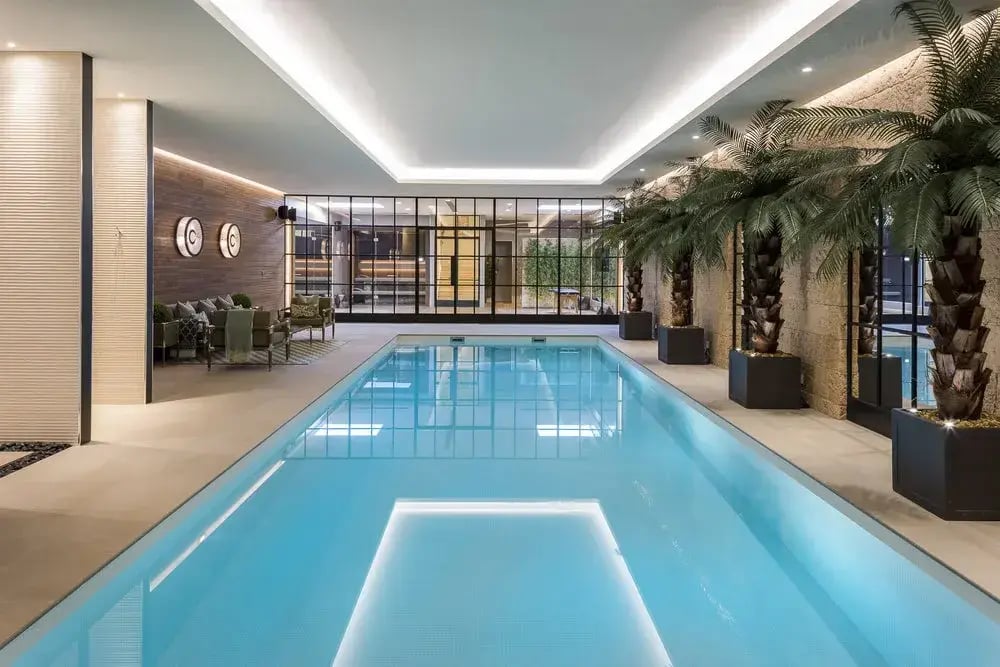
Before breaking down individual components, it helps to understand realistic totals. Several estimates that rank highly on Google quote figures that look attractive but exclude groundworks, landscaping, and finishing details. The true all-in cost is consistently higher.
Based on current UK pricing across a range of builders:
| Pool Type | Typical Size | All-In Range (inc. VAT) |
|---|---|---|
| Vinyl liner, above-ground | 6m x 3m | £8,000 to £20,000 |
| Vinyl liner, in-ground | 8m x 4m | £30,000 to £55,000 |
| Fibreglass, standard | 8m x 4m | £50,000 to £75,000 |
| Fibreglass, large | 10m x 5m | £65,000 to £95,000 |
| Concrete (gunite), standard | 8m x 4m | £75,000 to £130,000 |
| Concrete, bespoke / premium | 10m x 5m+ | £130,000 to £220,000+ |
| Stainless steel | Any | £100,000 to £220,000+ |
| Indoor pool (add to above) | Any | + £40,000 to £100,000 |
These figures include excavation, shell, internal finish, filtration, heating, pipework, coping, and electrical. Landscaping around the pool perimeter is usually quoted separately.
Industry surveys of UK pool builders consistently show that quality in-ground pool projects fall in the £120,000 to £200,000 range once VAT and groundworks are included. Groundworks alone add £8,000 to £25,000 depending on soil conditions, site access, and depth.
Excavation and Groundworks
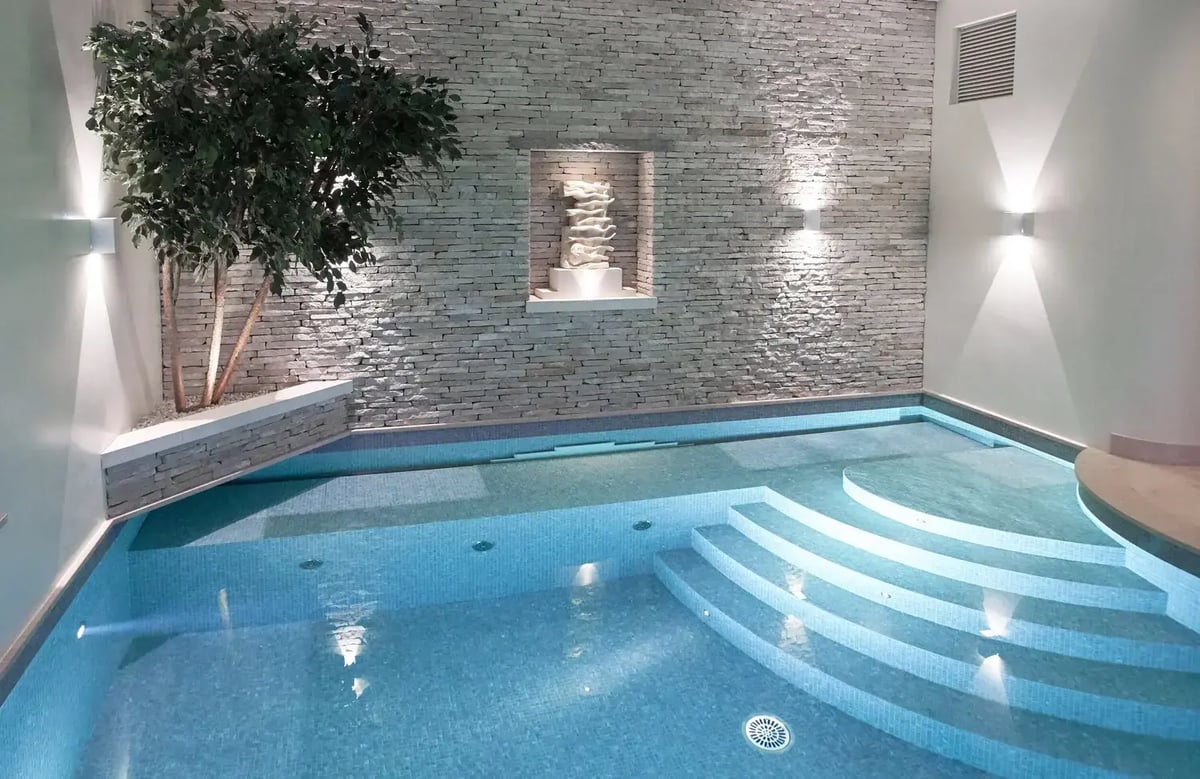
Excavation is the first cost most buyers underestimate. It is also the one most likely to vary based on conditions you cannot see before you dig.
A standard residential in-ground pool at 8m x 4m with a 1.5m average depth requires removing roughly 50 to 65 cubic metres of spoil. The excavation itself typically costs £5,000 to £12,000. What turns this into £20,000 or more is what follows: shoring up unstable ground, pouring concrete foundations, managing drainage, handling high water tables, and building a plant room.
Key factors that drive excavation costs higher:
- Soil type. Clay and chalk excavate cleanly. Rocky ground requires specialist equipment and longer programmes.
- Spoil removal. All that earth has to go somewhere. Tip fees and haulage for a full residential dig add £2,000 to £5,000.
- Site access. A narrow side gate extends time and cost. If a machine cannot reach the dig area, work goes by hand, and rates rise accordingly.
- Plant room. Most in-ground pools require a separate enclosure for filtration, heating, and controls. This adds structure, waterproofing, and electrical costs that headline quotes often omit.
- Water table. A high water table requires ground dewatering during the dig, an additional hire cost and a potential ongoing structural consideration.
A phrase common in the pool industry is that groundworks are a box of unknowns. Get a quote that explicitly includes a site visit, and ideally a geotechnical survey, before the estimate is fixed. Build in a 15 to 20 per cent contingency on this line alone.
Pool Shell Types and What They Cost
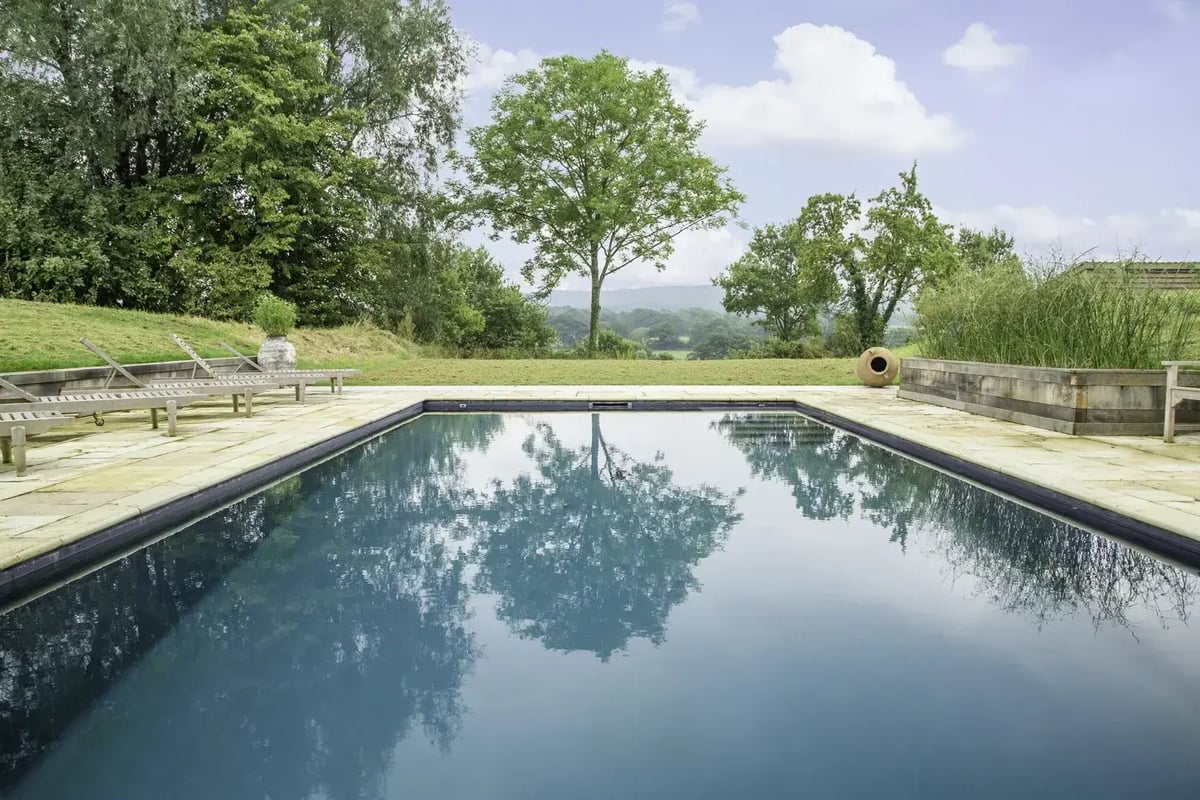
The shell is the structural container that holds the water. There are four main types used in the UK, each with different costs, flexibility, longevity, and maintenance profiles.
Vinyl Liner Pools
A steel or polymer frame with a vinyl membrane stretched over the interior. The shell itself is the cheapest in-ground option. The liner, typically 0.75mm to 1mm thick, needs replacing every 8 to 15 years at a cost of £3,000 to £8,000. Design flexibility is limited to standard shapes. Total installed cost: £30,000 to £55,000.
Fibreglass (GRP) Pools
A pre-formed glass reinforced plastic shell manufactured off-site, crane-lifted into the excavation, and backfilled around. The main advantage is speed: a fibreglass pool can be in the ground within days and operational within a week. The main limitation is shape. Standard forms max out at around 10m x 4.5m before logistics become prohibitive, and fully bespoke designs are not possible.
The gel coat interior is durable and does not need replacing, though it is susceptible to cracking if the pool drains completely. Total installed cost: £50,000 to £95,000 depending on size.
Concrete (Gunite or Shotcrete) Pools
The most common choice for premium residential pools. Steel rebar is laid in the excavation, then high-pressure concrete is pneumatically applied and shaped before curing. The resulting shell is structural, permanent, and entirely custom: any shape, depth, or feature is achievable, including an infinity edge. The tradeoff is time. A concrete pool typically takes three to six months from dig to water, and it requires an internal finish applied separately.
Builders specialising in bespoke concrete pools, such as Guncast, typically work from £150,000 upwards for a complete project. Total installed cost: £75,000 to £220,000+ depending on size and specification.
Stainless Steel Pools
Used predominantly for indoor installations, commercial environments, or architecturally driven residential projects. Stainless steel pools arrive on-site largely pre-built, modular, and precision-engineered. They are the most expensive shell type and also the most dimensionally flexible for confined indoor spaces. Total installed cost: £100,000 to £220,000+.
Internal Finishes: Liner, Tile and Render
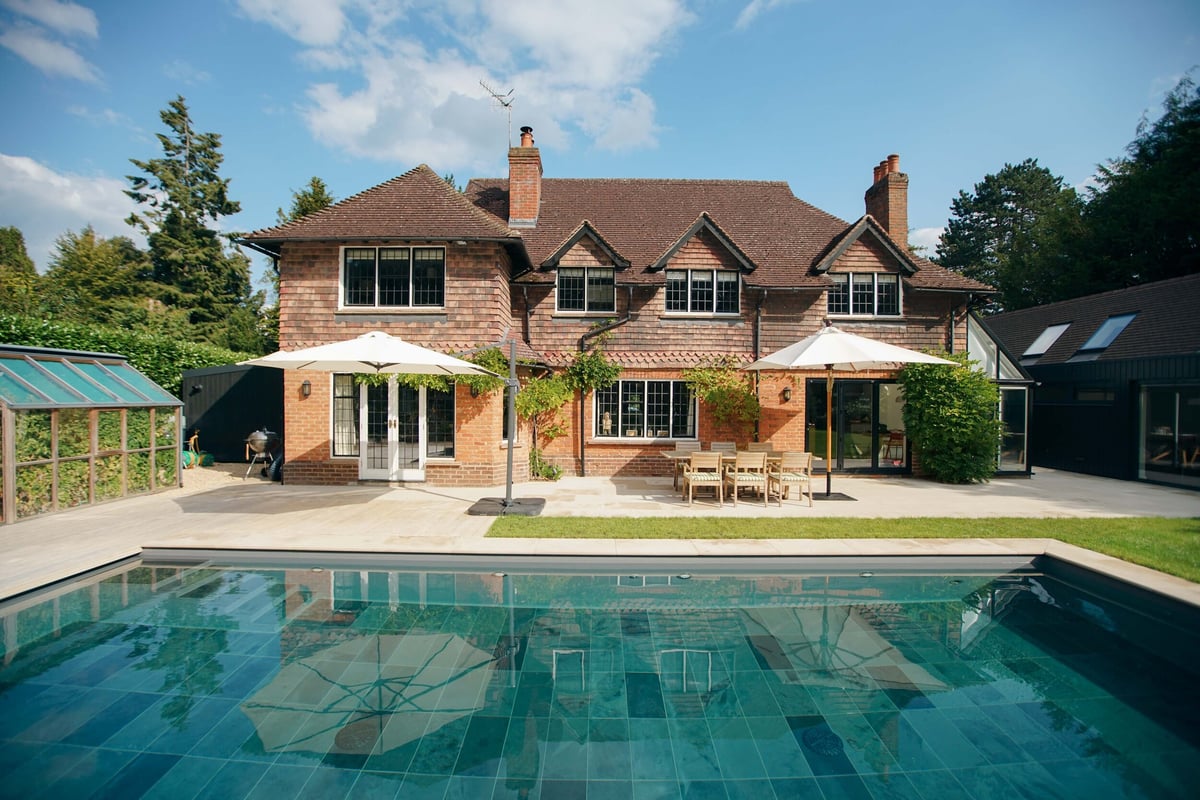
For concrete pools, the shell is the structure only. The internal finish is a separate specification and cost, covering what you see and feel inside the water.
Vinyl liner (as a finish on concrete). Liners fitted inside concrete shells reduce total cost while sacrificing the premium aesthetic. They need replacing every 10 to 15 years. Supply and fit: £3,000 to £8,000.
Render and paint. Cement render applied to the shell, then painted with specialist pool paint. The lowest-cost finish for concrete and the highest-maintenance: pool paint requires reapplication every three to seven years. Cost: £4,000 to £10,000, plus ongoing repainting costs.
Ceramic and porcelain tile. The finish found in most mid-to-high-end residential pools. Individual tiles, typically 10cm x 10cm mosaics or larger-format porcelain slabs, are applied by specialist pool tilers. Durable for 20 to 30-plus years with correct water chemistry. Cost ranges from £8,000 to £18,000 for standard ceramic mosaic to £15,000 to £40,000 for large-format porcelain. Hand-cut glass mosaic can exceed £40,000.
Exposed aggregate. A textured cement finish combined with small stones or glass beads. Durable, slip-resistant, and increasingly specified for outdoor pools. Cost: £10,000 to £20,000.
Pool Size and Volume: How Dimensions Drive the Budget
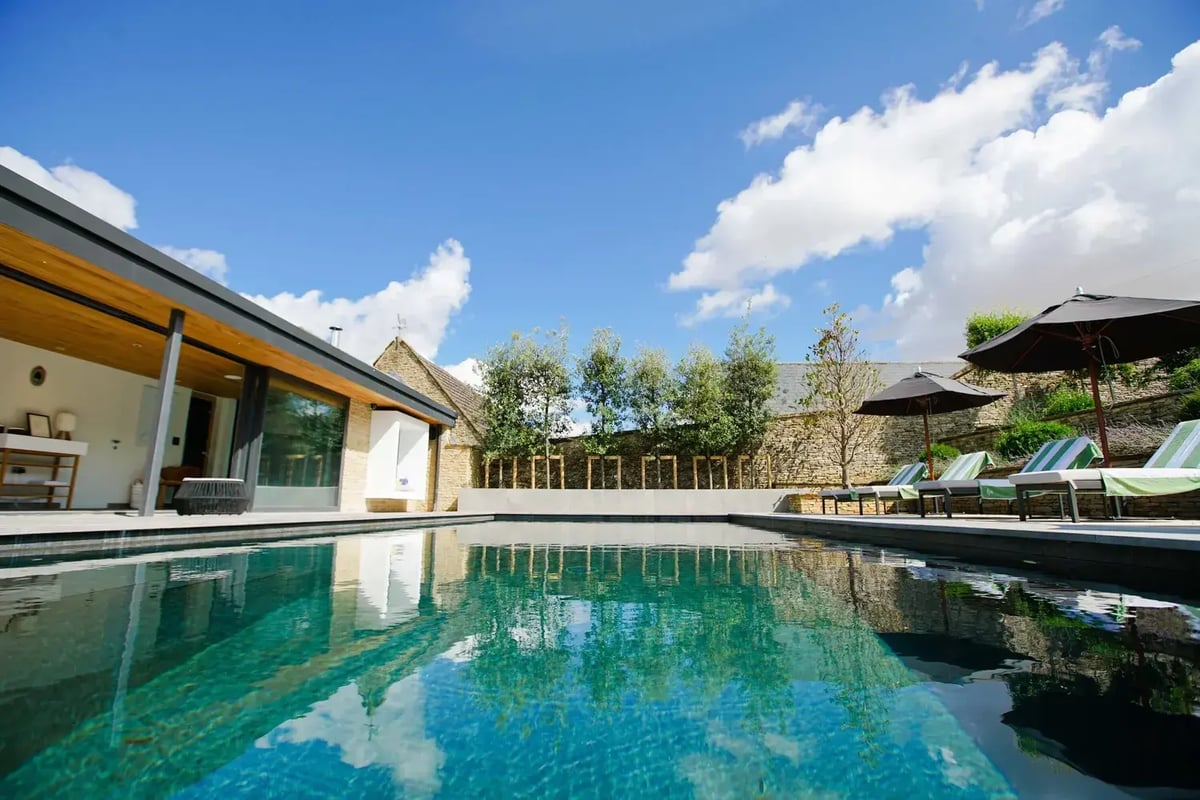
Pool size is not just an aesthetic decision. It directly determines excavation volume, shell material quantity, filtration capacity, pipework diameter, heating load, water volume, and running costs. Every decision in this guide scales with size.
Common UK residential pool sizes and their approximate water volumes:
| Dimensions | Approx. Volume | Typical Use |
|---|---|---|
| 6m x 3m | 22,000 to 27,000 litres | Plunge or splash pool |
| 8m x 4m | 40,000 to 48,000 litres | Standard family pool |
| 10m x 4.5m | 60,000 to 70,000 litres | Large family or light fitness |
| 12m x 5m | 90,000 to 100,000 litres | Serious lap training |
| 15m x 5m | 110,000 to 130,000 litres | Half-competition length |
A standard family pool at 8m x 4m with a 1.5m average depth holds approximately 48,000 litres. That volume governs three things directly:
- Filtration turnover rate. Most systems target a full volume turnover every four to eight hours. At 48,000 litres, that requires a pump capable of moving 6,000 to 12,000 litres per hour continuously.
- Heating load. Every 1 degree of temperature rise across 48,000 litres requires around 56kWh of energy. Bringing a cold pool to 28°C from a 10°C starting point takes roughly 1,000kWh before heat loss is factored in.
- Chemical load. For pools using chlorine or salt, more volume means more of everything needed to maintain correct chemistry.
Designing a pool two metres longer than you need is rarely the right decision. A well-specified 8m x 4m pool costs significantly less to build and run than a 10m x 5m one. The experience in a clean, well-heated, well-filtered pool is determined by water quality far more than by dimensions.
Flow and Return Pipework

Flow and return pipework is the circulatory system of the pool. Water is drawn from the pool through skimmers and main drains, passes through filtration and heating equipment, and returns through jets in the pool walls. It is rarely discussed in cost guides and rarely broken out in builder quotes, but the decisions made here affect performance and long-term maintenance access in ways that are not easy to fix after construction.
Skimmers draw water from the top 25mm of the pool, removing oils, debris, and surface contaminants before they sink. A standard 8m x 4m pool typically requires two skimmers; a larger pool three or four.
Main drain and suction outlets draw water from the pool floor. UK safety standards (PWTAG) require dual anti-entrapment suction outlets. A single floor drain does not comply. This is a building requirement, not optional.
Return jets should be positioned to create circulation that sweeps the full pool volume with no dead zones. A poorly designed return layout leaves corners where algae and bacteria can establish, regardless of how capable the filtration system is.
Backwash line. Sand filters require periodic backwashing to flush debris from the filter media. The backwash outlet needs a drain connection. This detail is sometimes missed in original build plans and expensive to add later.
Pipe materials. Most UK installations use pressure-rated UPVC or polyethylene pipe for supply lines. Copper corrodes in pool chemistry and can cause surface staining. Avoid it.
Plant room proximity matters. Pipe runs add both cost and performance loss. A plant room directly beside the pool minimises pipe length and heat loss from heating pipework. A plant room 30 metres from the pool, not uncommon when house layouts make proximity impractical, adds pipe material, labour, and pressure loss that requires a larger pump to compensate.
Pipework is typically bundled into the builder's overall installation cost. As a rough guide, the hydraulics package for a standard 8m x 4m pool, covering pumps, pipework, valves, and connections, accounts for £4,000 to £10,000 of the build.
Filtration System Costs
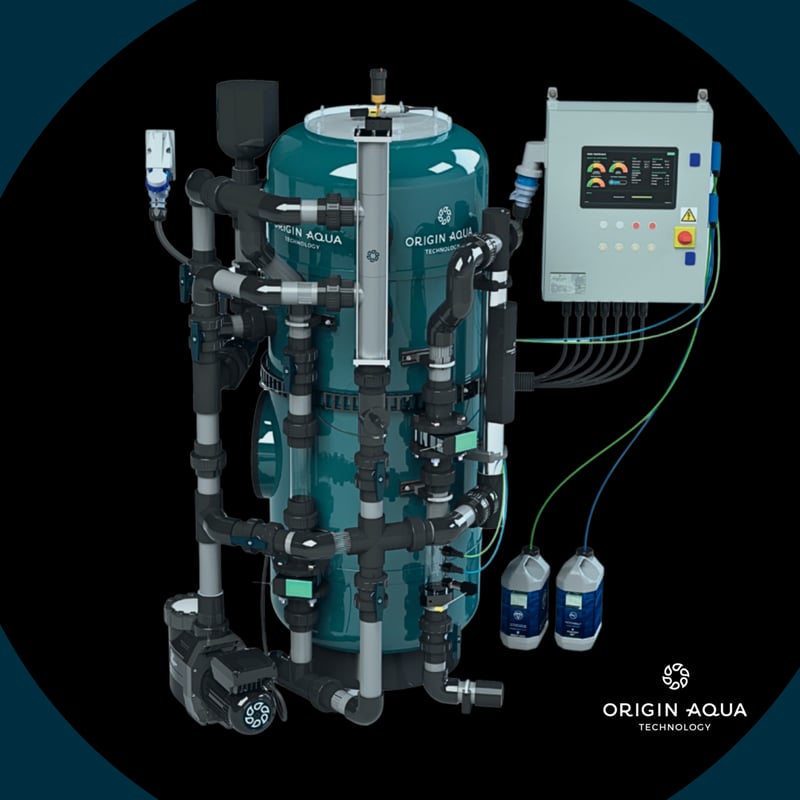
Filtration is the single build decision with the largest long-term effect on running costs, water quality, and maintenance burden. It is also the decision that is genuinely difficult to change after construction. The plant room and pipework are designed around it.
Sand filtration is the standard. A pressurised vessel filled with silica sand or glass media removes particulate matter from the water as it passes through. Sand filters require backwashing every one to four weeks and media replacement every five to seven years. Chemical dosing alongside is required: chlorine, pH adjusters, and algaecide. Typical cost (filter vessel, pump, controls): £2,000 to £6,000. Chemical running costs add £600 to £1,200 per year.
Cartridge filtration uses a pleated element instead of sand. Higher filtration accuracy but requires manual cleaning and periodic cartridge replacement. Better suited to smaller pools and swim spas. Typical cost: £1,500 to £4,000.
Biological filtration is a fundamentally different approach. Rather than mechanically removing particles, a biological system establishes a living microbial ecosystem that removes nutrients from the water. Phosphate, nitrogen, and carbon are stripped out, starving bacteria and algae of what they need to survive. No chemical dosing is required at any stage.
Origin Aqua's Mineral+Biome® system works on this principle. Developed by PhD microbiologists following a 2013 breakthrough, it produces natural spring-quality mineral water: crystal-clear, soft on skin, and chemical-free. For pools being specified from scratch, Mineral+Biome® can be integrated into the plant room design from the outset. It can also be retrofitted to an existing pool in a single day without replumbing. Full details are at our technology page, and in our guide to retrofitting an existing pool to chemical-free filtration.
The specification decision matters at build stage because biological and chemical systems have different space, pipework, and flow-rate requirements in the plant room. Installing infrastructure optimised for one and retrofitting the other later costs more than specifying correctly the first time. If you're weighing this against a full natural pool or swimming pond build rather than a filtration choice within a conventional pool, the costs and trade-offs are different again — see our guide to what a natural pool actually is and what it costs.
Heating Systems
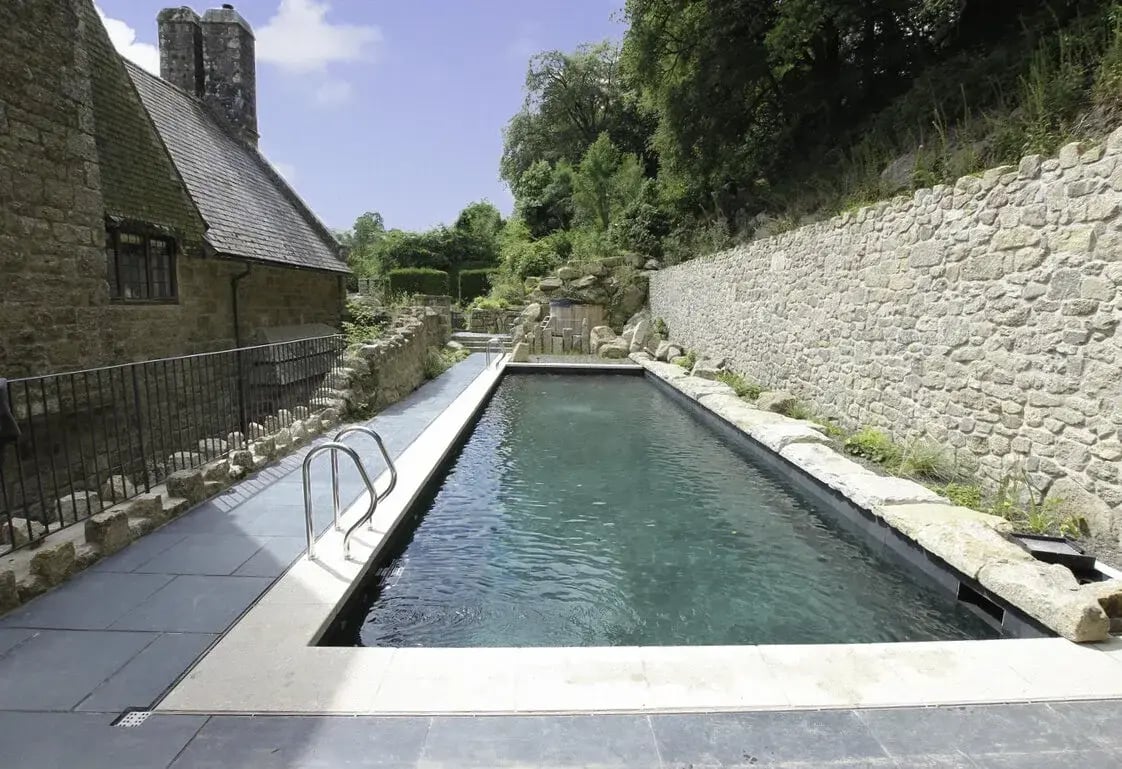
Heating turns a UK outdoor pool from a two-month summer feature into one you can use from April to October. For an indoor pool, the question is not whether to heat but which system.
Air Source Heat Pump (ASHP) is the most popular choice for outdoor pools. An ASHP extracts heat from ambient air and transfers it to the pool water, achieving efficiencies of 400 to 600 per cent. For every 1kW of electricity consumed, 4 to 6kW of heat is delivered. Running costs are significantly lower than gas. Performance falls in cold ambient temperatures, but modern units operate down to -10°C. For an outdoor pool used April to October, this rarely presents a practical problem. Typical cost (supply and installation): £4,000 to £10,000. For a full breakdown of every heating method, including gas, oil, solar thermal, and how covers and insulation affect running costs, see our complete guide to heating a swimming pool.
Gas condensing boiler with heat exchanger is faster. A gas boiler can raise pool temperature quickly, making it useful for pools heated on demand rather than maintained continuously. For indoor pools with existing gas infrastructure, this often makes practical sense. Running costs are higher than ASHP but capital cost is lower. Typical cost: £3,000 to £7,000.
Ground Source Heat Pump (GSHP) offers the lowest running cost but requires ground loop pipework buried across a large area of garden. Suitable for rural properties with the land available. Not practical for most urban or suburban plots. Typical cost: £8,000 to £20,000+.
Solar thermal works well as a supplement rather than a primary heat source. Collectors on a south-facing roof can reduce ASHP or gas running costs by 30 to 50 per cent during the swimming season. Rarely sufficient as the sole heat source in the UK. Typical cost: £3,000 to £6,000.
The most cost-effective combination for an outdoor UK pool is an air source heat pump paired with solar thermal and a well-insulated cover used every night. The cover alone cuts heating costs by 30 to 50 per cent by retaining overnight warmth.
Coping
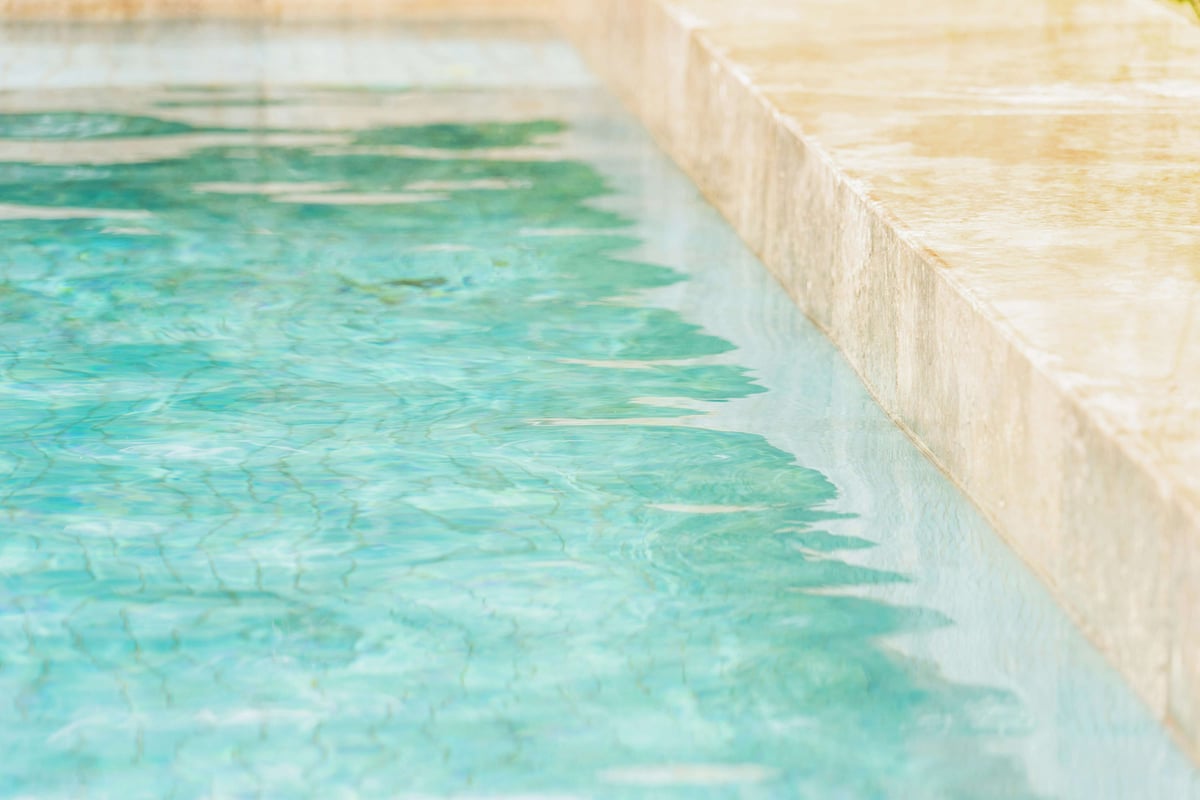
Coping is the edging material that finishes the pool perimeter at the waterline, framing the pool and providing a safe, slip-resistant edge. It is also where the pool transitions to the surrounding patio or decking, so the material choice affects the visual character of the whole installation.
Natural stone (limestone, granite, sandstone, slate) is the most popular premium choice. Durable, slip-resistant when textured, and ages well. All require sealing to prevent absorption of pool water and chemicals. Typical cost: £4,000 to £12,000 for a standard perimeter, depending on stone type and edge profile.
Porcelain. Large-format porcelain pavers are increasingly specified for modern pool designs. Low maintenance, consistent in appearance, and highly resistant to pool chemicals and freeze-thaw cycles. The finish can appear colder than natural stone but long-term performance is superior. Typical cost: £3,000 to £9,000.
Travertine. A natural limestone with characteristic pitting that provides inherent slip resistance. Extensively used in Mediterranean pool design and popular with UK architects. Requires sealing. Typical cost: £3,500 to £8,000.
Poured concrete. The lowest-cost functional option. Can be finished with exposed aggregate or texturing to improve slip resistance. Often used as a substrate for tiling or paving later. Typical cost: £1,500 to £4,000.
Landscaping
.webp?width=1200&height=800&name=natural-swimming-pool-origin-aqua-luxury-102+(1).webp)
Landscaping is the category most often stripped from initial budgets when build costs overrun. It is also the one most noticeable when it is absent. A finished pool sitting in a bare excavation site with no surrounding hard surface is not the end product anyone wanted.
Landscaping around a pool typically includes:
- Patio or decking surrounding the pool perimeter
- Retaining walls where a pool is set into sloping ground
- Planting and screening for privacy
- External and underwater lighting
- Fencing (recommended where children under five have garden access)
- Steps, pathways, and entrance areas
Patio and hard surfacing surrounds the pool on at least three sides. Options range from standard block paving at £80 to £150 per square metre to premium porcelain or natural stone at £150 to £300 per square metre. A pool with 4m of surround on three sides and a larger terrace behind typically requires 80 to 120 square metres of hard surfacing: a £10,000 to £30,000 range before other landscaping costs.
Planting and screening provides privacy and, in exposed gardens, wind protection. Wind significantly increases heat loss from an outdoor pool. Budget £2,000 to £10,000 for meaningful planting.
External lighting for the pool area and underwater lighting are often quoted separately from the main build. Budget £2,000 to £8,000 for a well-lit pool area.
Total landscaping for a mid-range installation: £10,000 to £40,000+. Premium country house installations regularly exceed this.
What Your Quote May Not Include
Several costs consistently appear during or after a pool build that were absent from the initial estimate:
VAT. Pool installation is standard-rated at 20%. Many builder quotes, particularly at the premium end, are presented exclusive of VAT. A £120,000 quote becomes £144,000.
Groundworks overrun. Already discussed: soil conditions, water table, and access all generate change orders. Allow a 15 to 20 per cent contingency on the groundworks line specifically.
Planning and surveys. Most outdoor residential pools do not need planning permission under permitted development. Where permission is needed, add legal and planning fees of £2,000 to £5,000. Structural engineer costs add £300 to £500 per day if required.
Pool cover. A thermal cover for an outdoor pool recovers its cost in heating savings within a season or two. Budget £1,500 to £5,000 for a manual thermal cover and £4,000 to £15,000 for a motorised roller.
Electrical supply. Pool pumps, heating, lighting, and controls all require dedicated electrical supply and inspection by a qualified electrician. Budget £2,000 to £5,000 if not included in the build quote.
First fill. The first fill of a large pool, typically 40,000 to 100,000 litres, is not free. Metered mains water or delivered water by tanker adds £200 to £600.
Frequently Asked Questions
For questions about water treatment and Origin Aqua systems specifically, see our full FAQ.
How much does a swimming pool cost in the UK?
For a quality in-ground pool, the realistic all-in range is £50,000 to £220,000 depending on shell type, size, and finish. A mid-range fibreglass pool at 8m x 4m with standard heating, filtration, and coping typically costs £55,000 to £80,000. A bespoke concrete pool with premium tiling and landscaping typically costs £130,000 to £200,000+. Above-ground pools start from around £8,000 professionally installed but are not a direct substitute for an in-ground pool in terms of lifespan or resale value.
How much does an outdoor swimming pool cost in the UK?
An outdoor pool sits at the base range for UK pools: £50,000 to £220,000 depending on shell type, size, and finish, without the £40,000 to £100,000 building and ventilation premium an indoor pool adds. A mid-range outdoor fibreglass pool at 8m x 4m typically costs £55,000 to £80,000 all-in. Because it is not enclosed, an outdoor pool also avoids the ongoing ventilation running costs that indoor pools carry.
Do I need planning permission for a swimming pool in the UK?
Most in-ground outdoor pools on residential property in England fall within permitted development rights. Planning permission is not required in most cases. Exceptions include pools within listed building curtilages, in conservation areas, on agricultural land, or where the pool would cover more than 50 per cent of the curtilage. Indoor pools attached to the house are treated as extensions and may require consent. Always check with your local planning authority before committing. Scotland, Wales, and Northern Ireland have slightly different permitted development rules. Our guide to swimming pool planning permission in the UK covers the rules by region and exception type in full.
How much does it cost to run an outdoor swimming pool in the UK?
Running costs for a standard outdoor pool at 8m x 4m, heated by an air source heat pump, typically run £2,000 to £5,000 per year. This covers electricity for the heat pump and filtration pump, annual servicing, and replacement chemicals for a traditional treatment system. A good insulated cover used every night reduces heating costs by 30 to 50 per cent. Chemical-free treatment systems eliminate the chemical running cost entirely.
Can I put a pool in my garden in the UK?
Yes. An in-ground or above-ground pool in a private garden in England does not generally require planning permission under permitted development rights. Check with your local planning authority if your property is listed, in a conservation area, or if the pool would significantly cover the garden area. Indoor pools are assessed differently as extensions and may require consent.
Do I legally need a fence around my pool?
There is no universal legal requirement in England for residential pool fencing. If children under five have regular access to your garden, fencing is strongly recommended and your insurer may require it as a condition of cover. Some councils attach fencing conditions to planning approvals where consent is needed. Check your home insurance policy and any planning approval carefully.
Is an indoor swimming pool worth it?
An indoor pool costs significantly more to build: add £40,000 to £100,000 for the building shell and specialist ventilation on top of the pool cost. Running costs are higher. The payback is year-round usability, privacy, and the ability to swim regardless of UK weather. For families who swim regularly, an indoor pool offers considerably more value per year than an outdoor pool used only during warm months. The ventilation system, which must manage chloramine vapour in a traditional chlorine pool, is a significant ongoing maintenance item. Chemical-free water treatment removes this concern entirely because no chloramines are produced.
The One Specification Decision That Is Difficult to Change Later
Most decisions in a pool build can be revisited. You can retile in ten years, upgrade the heating system, or add landscaping later. One decision is genuinely difficult and expensive to change after construction: your water treatment system.
The filtration equipment, plant room layout, pipework sizing, and electrical infrastructure are all designed around the treatment method chosen at the start. If the plant room is built for a sand filter and chemical dosing system, retrofitting biological filtration later is possible but more disruptive and more expensive than specifying it correctly from the outset.
The question worth asking your builder, before the plant room is designed: what water treatment systems are compatible with this build, and what would it cost to change later?
If you're planning a pool and want to understand water treatment options, including chemical-free alternatives, before the plant room design is fixed, our team is happy to advise. We don't build pools, so we have no commercial interest in the answer.

What Is a Natural Pool? Types, Cost and How It Compares to a Swimming Pond
How to Heat a Swimming Pool: Every Method Compared
No Comments Yet
Let us know what you think